
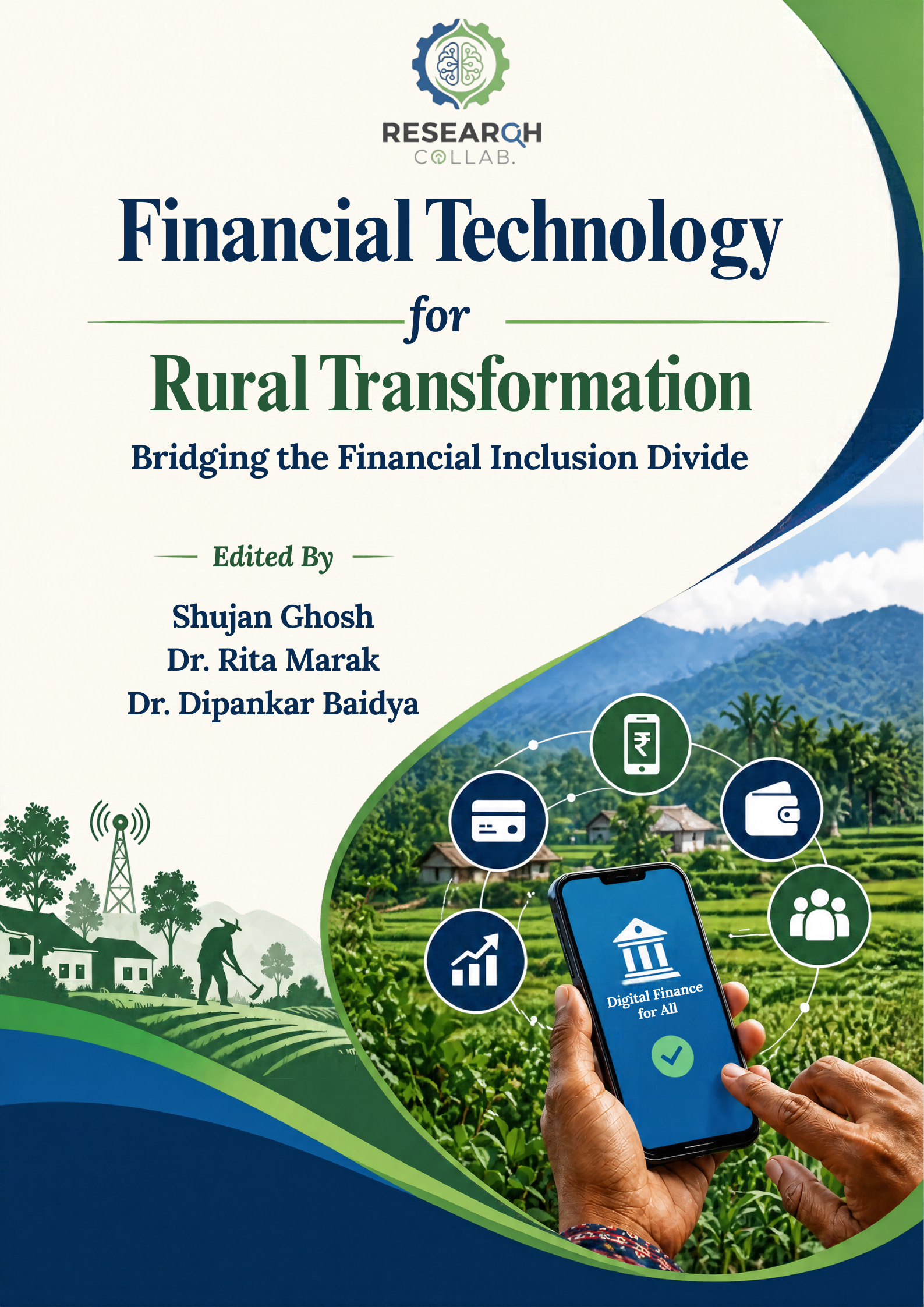
Financial Technology for Rural Transformation Bridging the Financial Inclusion Divide
##plugins.pubIds.doi.readerDisplayName##
https://doi.org/10.5281/zenodo.23638265
Keywords:
Financial Inclusion, Financial Technology, Digital Financial Literacy, Rural Development, Digital Payments, North East India, Assam, FinTech Adoption, Artificial Intelligence in Banking, Sustainable DevelopmentSynopsis
Financial Technology for Rural Transformation: Bridging the Financial Inclusion Divide examines the growing role of financial technology in promoting financial inclusion and rural development in India, with particular emphasis on Assam and North East India. Despite the expansion of bank accounts, digital payment systems, and public digital infrastructure, significant challenges remain in ensuring equitable access to and effective use of financial services. Geographical barriers, recurrent floods, limited digital literacy, inadequate infrastructure, gender disparities, and a lack of public trust continue to influence the adoption of financial technology in rural communities.
Featuring twenty-five chapters, this edited volume explores the adoption and utilisation of financial technology among farmers, weavers, artisans, small manufacturers, students, women, bank customers, and rural enterprises. It examines the importance of financial literacy, digital payment behaviour, consumer trust, individual attitudes, and technological accessibility in determining the effectiveness of inclusive financial services. The volume is organised around five major themes: conceptual and empirical foundations of financial inclusion; digital financial literacy and payment behaviour; FinTech adoption among communities and enterprises; regional and sectoral development, particularly agriculture and agro-based industries; and the emerging applications of artificial intelligence in banking and inclusive finance.
Drawing on primary surveys, secondary data analysis, conceptual discussions, and diverse research methodologies, the contributions present varied perspectives on the opportunities and challenges associated with digital financial transformation. The volume highlights how accessible financial services, improved digital infrastructure, targeted awareness programmes, and greater public confidence can strengthen financial participation and support sustainable rural development. It also provides a platform for emerging researchers to contribute empirical findings and innovative perspectives on financial inclusion in the North East region of India.
This book is intended for researchers, academicians, policymakers, banking professionals, development practitioners, and students interested in financial technology, inclusive finance, rural transformation, and regional economic development.
References
Demirgüç-Kunt, A., Klapper, L., Singer, D., Ansar, S., & Hess, J. (2020). The Global Findex Database 2017: Measuring Financial Inclusion and Opportunities to Expand Access to and Use of Financial Services. World Bank. https://doi.org/10.1596/978-1-4648-1259-0
Demirgüç-Kunt, A., Klapper, L., Singer, D., & Ansar, S. (2022). The Global Findex Database 2021: Financial Inclusion, Digital Payments, and Resilience in the Age of COVID-19. World Bank. https://doi.org/10.1596/978-1-4648-1897-4
Government of India. (2014). Pradhan Mantri Jan-Dhan Yojana: National Mission for Financial Inclusion. Department of Financial Services, Ministry of Finance. https://pmjdy.gov.in/
Reserve Bank of India. (2024). Report on Trend and Progress of Banking in India 2023–24. Reserve Bank of India. https://www.rbi.org.in/
Sarma, M. (2008). Index of financial inclusion. Indian Council for Research on International Economic Relations (ICRIER), Working Paper No. 215. https://icrier.org/
World Bank. (2022). Digital Financial Services. World Bank. https://www.worldbank.org/en/topic/financialinclusion
Published
20 October 2026
Copyright (c) 2026 Shujan Ghosh, Dr. Rita Marak, and Dr. Dipankar Baidya
Details about the available publication format: E-Book
E-Book
ISBN-13
978-81-180547-9-5
Details about the available publication format: Book (Paperback)
Book (Paperback)
ISBN-13
978-81-180547-8-8
How to Cite
Download Citation





 WhatsApp +91 6002313260